Gynecomastia
Some men may experience swelling of the chest as a result of hormonal imbalance or certain medications. Whatever the cause, they may feel psychologically embarrassed by the appearance of these breasts. Gynecomastia (unilateral or bilateral) occurs when the male mammary gland swells.
In Paris, Dr Santini offers "breast" surgery for men, to remove excess breast tissue and restore a more masculine torso.

What are the indications for gynecomastia surgery in Paris?
Gynecomastia involves an excess of mammary gland and fat, for a variety of reasons. It must be distinguished fromadipomastia, where the excess tissue is purely adipose. In the first case, techniques other than mastectomy, such as liposuction, are possible. In the case of gynecomastia, only removal of the mammary gland by subcutaneous mastectomy (excision of glandular hypertrophy) combined with liposuction can achieve a natural result.
Social security coverage for this procedure is possible only in the following cases: "procedure performed after endocrine assessment, after puberty, for marked gynecomastia that may pose a sexual or psychological problem (particularly asymmetrical, painful gynecomastia with areolar distension)".
Gynecomastia most often reflects a hormonal imbalance, with a reduction in the relative share of androgens.
That's why it's often normal at puberty and classic during andropause.
It is reversible during puberty.
What to do before gynecomastia surgery?
Before any gynecomastia operation, Dr. Christelle Santini will welcome you to her practice for an initial consultation. This will be an opportunity for her to carry out a clinical examination and palpation of the gynecomastia to ensure that there are no abnormalities.
She will then be able to determine the treatment best suited to your needs.
In pure adipomastia, the tissue is often soft and insensitive; it is denser and more sensitive in gynecomastia.
Mammography/ultrasound, an endocrine check-up and a preoperative check-up are often necessary.
In addition, Dr. Santini will prescribe a compression garment to be worn for 6 weeks as a dressing.
What's more, as the operation is performed under general anesthesia, you will need to meet with the anesthetist no later than 48 hours before the surgical procedure, in order to carry out additional tests if necessary.
Dr Santini will also detail the main recommendations, such as :
- Do not take any medication that increases the risk of bleeding, such as aspirin, in the 10 days prior to surgery.
- Total cessation of smoking, with the aim of perfecting surgical healing.
- Do not eat or drink for 6 hours before the operation.
Finally, you will be asked to wash your body and hair with Betadine the day before and the morning of the operation.
How is gynecomastia surgery performed?
Surgery is performed under general anaesthetic and usually requires a 24-hour hospital stay. In this case, you will spend one postoperative night at the clinic, and will not be discharged until the following morning, after Dr. Santini has given the go-ahead, so that you can be constantly monitored.
Once the contours have been defined, Dr Christelle Santini makes a small incision to perform liposuction. This is the only procedure required for adipomastia.
In the case of gynecomastia, the horizontal incision is then extended to the lower part of the areola, so that excess glandular tissue can be removed.
Hemostasis is perfectly controlled, to limit post-operative inflammation and pain.
Scars from gynecomastia depend on the surgical procedure performed: they are most often peri-areolar, very discreet and easily concealed by chest hair and areola coloring.
This procedure lasts between 1 and 2 hours.
What to do after gynecomastia surgery?
To reduce the risk of hematoma, your surgeon may insert drains, which will be removed at the same time as the dressing, the day after the operation, just before you are discharged. At that point, a lighter dressing will be put in place, along with the compression bolero.
Edema and ecchymosis are fairly common post-operative consequences and should not worry you. Pain, on the other hand, is mild and can be largely alleviated by taking painkillers.
Following the procedure, we strongly advise against :
- Practising a sporting activity before 2 months
- Exposing your torso to the sun without high-quality UV protection for scars.
The first results of gynecomastia surgery are immediately visible. They are, however, affected by edema.
That's why you need to wait about 6 months to appreciate the final result. The male breasts have disappeared and the bust has a more masculine and dynamic silhouette.
Scars gradually remodel, fading perfectly between 12 and 18 months.
Highlights of gynecomastia
- Return home sometimes the same day, or the next day
- 3 to 7 days of professional downtime
- Definitive result at 6 months, with a more masculine silhouette
Gynecomastia in a nutshell...
What to do before gynecomastia surgery?
- 1 to 2 consultations with your plastic surgeon, including the taking of medical photographs
- Delivery of the estimate and consent form for signature, respecting the 15-day legal delay between the first consultation and the gynecomastia.
- Anesthesia consultation, medical imaging, blood and hormone tests.
What is the procedure for gynecomastia?
- General anaesthesia most often
- 1h to 1h30, depending on the amount of fat suctioned and the number of areas suctioned.
- Return home after gynecomastia the same day, or the next morning.
- Discreet scars
What is the post-operative course of gynecomastia?
- Compression vest worn for 4 to 6 weeks. Anticoagulants for 7 to 10 days.
- Follow-up visit with your plastic surgeon 7 to 10 days after the procedure.
- Sutures used in gynecomastia surgery are absorbable
- Stopping sport after gynecomastia for three to six weeks.
- Allow 3 to 7 days' leave.
- Final result obtained after 3 to 6 months.
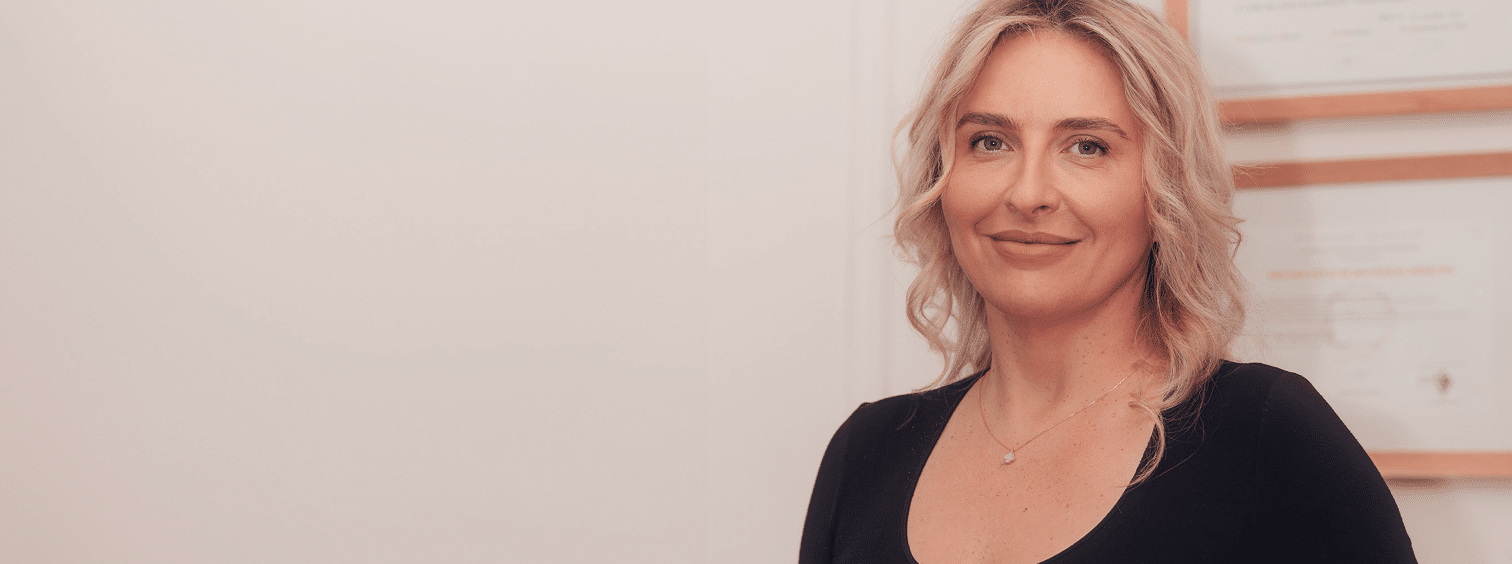
WRITTEN AND MEDICALLY REVIEWED BY:
Dr Christelle Santini
specialist in cosmetic surgery & medicine in paris

I am Dr. Christelle Santini, a specialist in cosmetic surgery and medicine with over 16 years of experience, based in Paris. I am:
- Surgeon qualified by the Collège Français de Chirurgie Plastique et Esthétique, registered with the Conseil de l'Ordre des Médecins in Paris.
- Member of the French Society of Plastic, Reconstructive, and Aesthetic Surgery (SoFCPRE).
- Former Assistant Chief of Staff at the Paris School of Medicine.
- My RPPS ID: 10005192595
My goal is to provide each patient with personalized care that combines transparency and safety with technical expertise and natural-looking results.